QNAP TS-h3077AFU 30-Bay All-Flash Rackmount NAS
All-flash storage for demanding shared workloads Bring responsive flash storage, resilient power and a clear expansion path into the server rack. QNAP TS-h3077AFU combines a single AMD Ryzen 7000 series processor with a dense SATA SSD platform, dual 10GbE connectivity and QuTS hero ZFS storage. It is designed for businesses consolidating active data, virtualised workloads and collaboration onto a managed storage system, with resources that can be planned around the application rather than an unqualified performance headline. Highlights Single AMD Ryzen 5 or Ryzen 7 processor platform. Hot-swappable 2.5-inch SATA SSD storage in a 2U chassis. Dual 10GBASE-T and dual 2.5GbE networking built in. QuTS hero ZFS with compression, snapshots and supported deduplication. Redundant power supplies and compatible PCIe, SAS, SATA or USB expansion. Key Features Flash storage where active data belongs A dedicated SATA SSD platform suits shared applications and virtualised services that need responsive access to active data. Choose enterprise SSDs with the appropriate endurance, power-loss protection and approved firmware for the workload. The front bays accept compatible 2.5-inch SATA SSDs; they are not a substitute for SAS or NVMe backplanes, and 3.5-inch hard drives do not fit. Compute and memory chosen for the workload Ryzen 5 and Ryzen 7 configurations provide different compute and factory-memory starting points within the same appliance family. Four DDR5 UDIMM slots allow substantial memory expansion for suitably designed workloads. Factory memory is non-ECC; compatible ECC can be used as a replacement configuration, with matching modules and without mixing the two types. This is a single-processor system. ZFS storage with a deliberate array design QuTS hero provides ZFS checksums, supported self-healing, snapshots and data-reduction functions. Plan pool structure and spare capacity before loading production data. New RAID 5, RAID 6 and triple-parity groups have a sixteen-drive limit per group, so a larger installation needs a suitable multi-group arrangement such as RAID 50 or RAID 60. RAID resilience remains separate from an independent backup. Built-in networking with room for more Two 10GBASE-T ports and two 2.5GbE ports give the system useful connectivity without a network-card purchase. Three PCIe Gen4 slots allow supported network, NVMe or expansion adapters, subject to lane sharing, card size and compatibility. Slot two changes lane width when slot one is occupied, so the complete card arrangement matters when designing a faster storage path. Keep serviceability part of the design Hot-swappable SSD trays and redundant power supplies support a managed rack installation. The optional RAIL-A03-57 kit provides the verified rack-rail route and is purchased separately. Confirm rack depth, airflow, power provision and service access before installation. Redundancy reduces selected hardware risks; it does not guarantee uninterrupted applications or remove the need for a tested recovery plan. Bring backup and recovery into the same plan Hybrid Backup Sync coordinates scheduled copies to another NAS, supported cloud storage or a connected backup drive. Snapshots provide useful recovery points for supported volumes, shared folders and iSCSI LUNs, according to the selected operating system. Keep a separate, tested backup: RAID and snapshots on the same appliance do not protect against every equipment failure, stolen system or compromised administrator account. Share information with clearer control SMB and NFS file services connect business workstations and supported servers, while directory integration, shared-folder permissions and encrypted connections help administrators manage access. Qsync supports synchronised working folders for suitable clients. Set permissions around the team and its applications rather than giving every user broad access, and keep the NAS and applications updated as part of normal maintenance. Use applications with resources to match Virtualization Station and Container Station can place suitable virtual machines and containers near their storage. Available memory, processor demand, licensing and operating-system support determine what should run together. Reserve resources for file services, backups and surveillance before adding other workloads. Hardware encryption acceleration helps supported security tasks, but does not remove the need for sound access controls and recovery procedures. Summary TS-h3077AFU brings dense SATA flash storage and built-in 10GbE into a serviceable rack platform. Its value comes from a balanced design using suitable SSD endurance, memory, RAID groups and network capacity. Plan the application and recovery objectives first, then use the supported expansion routes to grow the system with control. Are drives and upgrade cards included?ExpandCollapse The NAS is supplied without storage drives. Optional networking, NVMe adapters and external expansion equipment are purchased separately. Which operating system should I choose?ExpandCollapse QuTS hero supplied; QTS alternative supported. Changing OS requires backup and storage reinitialisation. Select QTS or QuTS hero around the application, storage layout and required features, and keep an independent backup. Can I expand storage beyond the built-in bays?ExpandCollapse Yes. Compatible USB, SATA, SAS and PCIe expansion units are supported with the required host cards and cables. The optional RAIL-A03-57 is the verified rail kit for this NAS; enclosure rail kits are separate. How many cameras can the NAS record?ExpandCollapse QVR Pro on compatible QTS has an application ceiling of up to 128 channels with appropriate licences. This is a software ceiling, not a tested recording maximum for this NAS or its SSD layout. Recording capacity must be designed for the selected SSDs, valid multi-group RAID layout, retention, network and concurrent services. Confirm the recording workload and software entitlement before deployment; the application channel ceiling is not a workload certification. QVR Pro on supported QTS provides 8 included camera channels. QVR Surveillance provides 2 base channels plus 6 additional channels after eligible registration, giving 8 in total. Additional channels require the applicable licences and supported software. Does RAID replace a separate backup?ExpandCollapse No. RAID can maintain access through selected drive faults, while snapshots can help recover supported earlier states. Neither replaces a separate backup against theft, major hardware failure or compromised credentials. Keep protected copies and test that important data can be restored. Which service and storage add-ons should I choose?ExpandCollapse Choose the 25–40-bay NASCare tier subject to assessment for an all-flash system, the RAIL-A03-57 rack kit and qualified enterprise SATA SSDs. Samsung PM893 is an enterprise SATA family used in QNAP's TS-h3077AFU material; confirm the exact drive part number, firmware and endurance before ordering.
追加商品 (3)
3005, Ubi Avenue 3, #01-88で受け取り可能
通常2〜4日で準備が完了します
QNAP TS-h3077AFU 30-Bay All-Flash Rackmount NAS
商品説明
All-flash storage for demanding shared workloads
Bring responsive flash storage, resilient power and a clear expansion path into the server rack. QNAP TS-h3077AFU combines a single AMD Ryzen 7000 series processor with a dense SATA SSD platform, dual 10GbE connectivity and QuTS hero ZFS storage. It is designed for businesses consolidating active data, virtualised workloads and collaboration onto a managed storage system, with resources that can be planned around the application rather than an unqualified performance headline.
Highlights
- Single AMD Ryzen 5 or Ryzen 7 processor platform.
- Hot-swappable 2.5-inch SATA SSD storage in a 2U chassis.
- Dual 10GBASE-T and dual 2.5GbE networking built in.
- QuTS hero ZFS with compression, snapshots and supported deduplication.
- Redundant power supplies and compatible PCIe, SAS, SATA or USB expansion.
Key Features
Flash storage where active data belongs
A dedicated SATA SSD platform suits shared applications and virtualised services that need responsive access to active data. Choose enterprise SSDs with the appropriate endurance, power-loss protection and approved firmware for the workload. The front bays accept compatible 2.5-inch SATA SSDs; they are not a substitute for SAS or NVMe backplanes, and 3.5-inch hard drives do not fit.
Compute and memory chosen for the workload
Ryzen 5 and Ryzen 7 configurations provide different compute and factory-memory starting points within the same appliance family. Four DDR5 UDIMM slots allow substantial memory expansion for suitably designed workloads. Factory memory is non-ECC; compatible ECC can be used as a replacement configuration, with matching modules and without mixing the two types. This is a single-processor system.
ZFS storage with a deliberate array design
QuTS hero provides ZFS checksums, supported self-healing, snapshots and data-reduction functions. Plan pool structure and spare capacity before loading production data. New RAID 5, RAID 6 and triple-parity groups have a sixteen-drive limit per group, so a larger installation needs a suitable multi-group arrangement such as RAID 50 or RAID 60. RAID resilience remains separate from an independent backup.
Built-in networking with room for more
Two 10GBASE-T ports and two 2.5GbE ports give the system useful connectivity without a network-card purchase. Three PCIe Gen4 slots allow supported network, NVMe or expansion adapters, subject to lane sharing, card size and compatibility. Slot two changes lane width when slot one is occupied, so the complete card arrangement matters when designing a faster storage path.
Keep serviceability part of the design
Hot-swappable SSD trays and redundant power supplies support a managed rack installation. The optional RAIL-A03-57 kit provides the verified rack-rail route and is purchased separately. Confirm rack depth, airflow, power provision and service access before installation. Redundancy reduces selected hardware risks; it does not guarantee uninterrupted applications or remove the need for a tested recovery plan.
Bring backup and recovery into the same plan
Hybrid Backup Sync coordinates scheduled copies to another NAS, supported cloud storage or a connected backup drive. Snapshots provide useful recovery points for supported volumes, shared folders and iSCSI LUNs, according to the selected operating system. Keep a separate, tested backup: RAID and snapshots on the same appliance do not protect against every equipment failure, stolen system or compromised administrator account.
Share information with clearer control
SMB and NFS file services connect business workstations and supported servers, while directory integration, shared-folder permissions and encrypted connections help administrators manage access. Qsync supports synchronised working folders for suitable clients. Set permissions around the team and its applications rather than giving every user broad access, and keep the NAS and applications updated as part of normal maintenance.
Use applications with resources to match
Virtualization Station and Container Station can place suitable virtual machines and containers near their storage. Available memory, processor demand, licensing and operating-system support determine what should run together. Reserve resources for file services, backups and surveillance before adding other workloads. Hardware encryption acceleration helps supported security tasks, but does not remove the need for sound access controls and recovery procedures.
Summary
TS-h3077AFU brings dense SATA flash storage and built-in 10GbE into a serviceable rack platform. Its value comes from a balanced design using suitable SSD endurance, memory, RAID groups and network capacity. Plan the application and recovery objectives first, then use the supported expansion routes to grow the system with control.
Are drives and upgrade cards included?
The NAS is supplied without storage drives. Optional networking, NVMe adapters and external expansion equipment are purchased separately.
Which operating system should I choose?
QuTS hero supplied; QTS alternative supported. Changing OS requires backup and storage reinitialisation. Select QTS or QuTS hero around the application, storage layout and required features, and keep an independent backup.
Can I expand storage beyond the built-in bays?
Yes. Compatible USB, SATA, SAS and PCIe expansion units are supported with the required host cards and cables. The optional RAIL-A03-57 is the verified rail kit for this NAS; enclosure rail kits are separate.
How many cameras can the NAS record?
QVR Pro on compatible QTS has an application ceiling of up to 128 channels with appropriate licences. This is a software ceiling, not a tested recording maximum for this NAS or its SSD layout. Recording capacity must be designed for the selected SSDs, valid multi-group RAID layout, retention, network and concurrent services. Confirm the recording workload and software entitlement before deployment; the application channel ceiling is not a workload certification. QVR Pro on supported QTS provides 8 included camera channels. QVR Surveillance provides 2 base channels plus 6 additional channels after eligible registration, giving 8 in total. Additional channels require the applicable licences and supported software.
Does RAID replace a separate backup?
No. RAID can maintain access through selected drive faults, while snapshots can help recover supported earlier states. Neither replaces a separate backup against theft, major hardware failure or compromised credentials. Keep protected copies and test that important data can be restored.
Which service and storage add-ons should I choose?
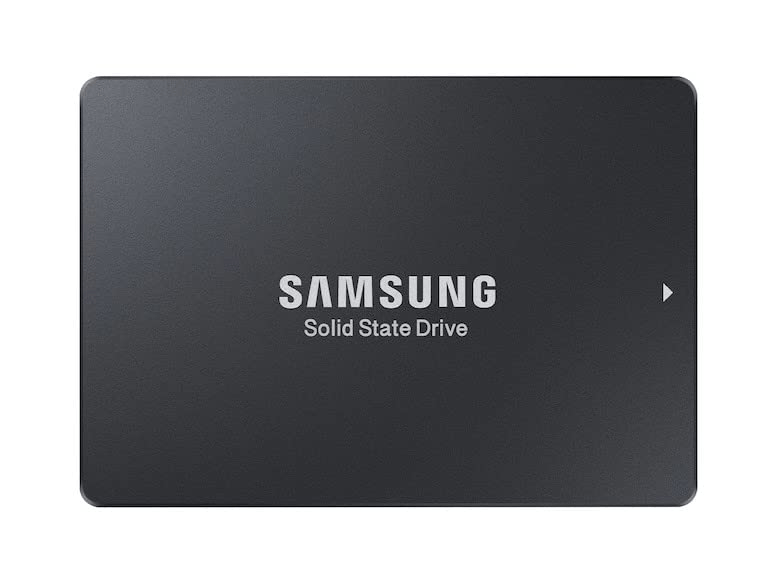
Choose the 25–40-bay NASCare tier subject to assessment for an all-flash system, the RAIL-A03-57 rack kit and qualified enterprise SATA SSDs. Samsung PM893 is an enterprise SATA family used in QNAP's TS-h3077AFU material; confirm the exact drive part number, firmware and endurance before ordering.
仕様
QNAP TS-h3077AFU 30-Bay All-Flash Rackmount NAS
The QNAP TS-h3077AFU is an all-flash rackmount NAS built around a single AMD Ryzen 7000 series processor, hot-swappable SATA SSD bays and redundant power supplies. Built-in 10GbE and 2.5GbE networking support business storage and virtualised workloads, while PCIe expansion provides further networking and enclosure options. QuTS hero adds ZFS data-integrity features. Select the processor, memory, enterprise SSDs and RAID layout together to suit the workload, endurance requirements and recovery plan.
| Specification | Details |
|---|---|
| Hardware and connectivity | |
| Processor configurations | Ryzen 5 7000 series, 6 cores/12 threads, up to 5.1GHz; or Ryzen 7 7000 series, 8 cores/16 threads, up to 5.3GHz. One processor per system. |
| Factory memory | Ryzen 5 configuration 32GB DDR5; Ryzen 7 configuration 64GB DDR5; non-ECC UDIMM. |
| Memory expansion | 4 UDIMM slots; maximum 192GB using 4 × 48GB. Compatible ECC is supported as a replacement configuration; never mix ECC/non-ECC modules. |
| System flash | 5GB with dual-boot OS protection. |
| Drive bays | 30 × hot-swappable 2.5-inch SATA SSD bays; SATA 6Gb/s. No 3.5-inch HDD, SAS or NVMe drive support in these bays. |
| NVMe expansion | Compatible optional QM2 PCIe adapter required; NVMe SSDs and adapter are not included. |
| RAID and pool layout | QuTS hero Single, RAID 0/1/5/6/10/50/60, triple mirror and triple parity where drive-count requirements are met; QTS layouts differ. New parity RAID groups/subgroups are limited to 16 drives; use an appropriate multi-group design for larger arrays. |
| Network interfaces | 2 × 10GBASE-T RJ45 plus 2 × 2.5GBASE-T RJ45 built in. |
| PCIe expansion | Slot 1 Gen4 x4; slot 2 Gen4 x8, reducing to x4 when slot 1 is occupied; slot 3 Gen4 x4. Check compatible card dimensions and bracket type. |
| USB interfaces | 2 × USB-A 10Gb/s. |
| Operating system and data services | |
| Operating system | QuTS hero supplied; QTS alternative supported. Changing OS requires backup and storage reinitialisation. |
| File system | QTS uses EXT4; QuTS hero uses ZFS. Operating-system changes require a backup and storage reinitialisation. |
| Snapshots and recovery | QTS volume/LUN snapshots or QuTS hero shared-folder/LUN snapshots; replication, retention and recovery features depend on the selected OS and available resources. |
| Backup and synchronisation | Hybrid Backup Sync for supported local, remote and cloud destinations; Qsync; supported Time Machine backups. Cloud capacity and third-party services may require separate subscriptions. |
| File sharing and access | SMB, NFS and FTP/SFTP services; directory integration, shared-folder permissions and encrypted connections. |
| Accounts and shared folders | QuTS hero supports up to 16,000 local users, 512 groups and 256 shared folders; QTS up to 4,096 users, 512 groups and 512 shared folders. Up to 5,000 concurrent SMB connections with maximum memory. |
| iSCSI storage | Thick/thin LUNs; QTS supports file-based and block-based LUNs, QuTS hero supports block-based LUNs. Multipath and snapshot capabilities depend on host and OS configuration. |
| Virtualisation and containers | Virtualization Station and Container Station for supported guests and images; usable capacity depends on CPU, installed RAM and concurrent workloads. |
| Data reduction | QuTS hero compression and inline deduplication; deduplication requires at least 16GB RAM, with 32GB or more recommended. QTS Qtier is available only in compatible QTS storage configurations. |
| Surveillance | |
| Included camera channels | QVR Pro on supported QTS provides 8 included camera channels. QVR Surveillance provides 2 base channels plus 6 additional channels after eligible registration, giving 8 in total. Additional channels require the applicable licences and supported software. |
| Camera capacity | QVR Pro on compatible QTS has an application ceiling of up to 128 channels with appropriate licences. This is a software ceiling, not a tested recording maximum for this NAS or its SSD layout. |
| Capacity conditions | Recording capacity must be designed for the selected SSDs, valid multi-group RAID layout, retention, network and concurrent services. Confirm the recording workload and software entitlement before deployment; the application channel ceiling is not a workload certification. |
| Surveillance OS qualification | QTS planning figures do not establish QuTS hero capacity. QVR Surveillance extra-channel expansion on QuTS hero must be verified before deployment; included-channel entitlement and application availability follow the installed OS. |
| Storage expansion | |
| USB expansion enclosures | Up to 2 × TL-D800C or TL-R1200C-RP; up to 2 × TR-002, TR-004 or TR-004U. TR hardware RAID enclosures use a separate pool or volume and cannot expand an existing internal RAID group. |
| SATA expansion enclosures | Up to 2 × TL-D400S, TL-D800S, TL-D1600S, TL-R400S or TL-R1200S-RP. Matching QXP SATA HBA and SFF-8088/SFF-8644 cables are required; select the card for the enclosure port count and available PCIe slot. |
| PCIe expansion enclosures | Up to 8 × TL-R1200PES-RP, TL-R1600PES-RP or TL-R2400PES-RP. Optional QXP-3X4PES with CAB-PCIE10M-8644-4X, or a supported QXP-3X8PES/cable arrangement, is required. These are dedicated PCIe cables, not interchangeable generic SAS cables. |
| SAS expansion enclosures | Up to 16 × TL-R1220Sep-RP or TL-R1620Sep-RP; up to 4 × TL-R6020Sep-RP. A compatible QNAP SAS HBA and external SFF-8644 SAS cables are required; verify card fit, memory and enclosure requirements. |
| Expansion planning | Limits apply by expansion type and supported configuration; do not add the separate maxima together. Check NAS memory, card lanes, firmware, cables and the supported storage-pool arrangement before deployment. |
| Physical and electrical | |
| Form factor | 2U rackmount. |
| Chassis dimensions H × W × D | 88.3 × 442.6 × 485.2mm, excluding rack ears and power-supply protrusions. Allow additional connector and service clearance. |
| Weight | Net 12.73kg; gross 18.69kg. |
| Power supply | 2 × 550W redundant power supplies; AC 100–240V. |
| Typical consumption | 380.23W under the manufacturer fully populated test configuration; actual consumption depends on installed SSDs and workload. |
| Cooling | 4 × 60mm system fans. |
| Environment | Operating 0–40°C; storage −20–70°C; 5–95% non-condensing relative humidity; wet-bulb 27°C. |
| Warranty | 5 years. |
| Rack rails | RAIL-A03-57 compatible; sold separately. |
| Package | NAS, 2 power cords, Cat6a Ethernet cable, 120 drive screws and quick installation guide. SSDs, rack rails and optional adapters are not included. |
追加商品


NASCare Extended Warranty with Loaner Unit for 25-40 Bays


QNAP Rail Kit C01/B01/B02/A02-90/A03-57/E02/E03/S01/S02